
What drugs are detected on a 12-panel drug test?
November 23, 2021
Pre-Employment vs. Random Drug Testing: What’s the Difference and When Each Applies
November 19, 2026
Federal rules for commercial motor vehicle accidents set two firm clocks: an alcohol test must be attempted within 2 hours of the accident (and no later than 8 hours), and a drug test must be completed within 32 hours. Miss either window and the employer has to document why, not just let the test slide.
Those numbers sound simple. In practice, employers get tripped up on three things: figuring out whether an accident even triggers mandatory testing, moving fast enough once it does, and documenting the process correctly when circumstances make testing impossible in time.
When does an accident actually require testing?
Not every fender-bender triggers a federal post-accident test. Under FMCSA rules, testing is required when a commercial motor vehicle accident involves a human fatality, or when it involves a citation to the driver for a moving violation AND either an injury requiring immediate medical treatment away from the scene, or a vehicle towed from the scene due to disabling damage.
That last part trips people up constantly. If there’s a tow or a treated injury but no citation issued to the driver, federal testing isn’t required, even if the crash looks serious. Employers sometimes test anyway out of caution, which is allowed, but it’s worth knowing the rule doesn’t require it in that scenario. Conversely, a citation plus a tow with no injury still triggers the requirement. The citation is the hinge point in cases that don’t involve a fatality.
The clock starts at the accident, not when someone notices
The 8-hour alcohol testing window and the 32-hour drug testing window both run from the time of the accident itself, not from when a supervisor finds out, not from when the driver is located, and not from when paperwork gets filed. A common mistake is treating the clock as starting once the employer becomes aware something happened. If a report comes in late, the available testing window has already been shrinking the whole time.
The alcohol test has the tighter requirement: it should be attempted as soon as possible, and if it hasn’t happened within 2 hours, the employer has to prepare and keep a record explaining why. After 8 hours, the attempt stops altogether and the employer documents the reason it couldn’t be completed.
In supplying testing programs to carriers and staffing agencies that manage DOT-regulated drivers, we’ve seen the 32-hour window get eaten by logistics far more often than by employer negligence: a driver transported to a hospital two counties away, a collection site that closes before the paperwork clears, a weekend accident with no open lab nearby. The rule doesn’t care about the reason, only whether it’s documented.
What happens if the window is missed
Missing the deadline doesn’t make the obligation disappear, it creates a documentation obligation instead. FMCSA guidance is explicit that if a test isn’t administered within the required time frame, the employer must prepare and maintain a record stating the reasons the test wasn’t promptly administered. This record needs specifics: who was contacted, what delayed the process (driver transported for medical care, driver unreachable, lab unavailable), and what was done once testing became possible again.
Employers who skip this step, assuming a missed deadline just means “no test happened,” are the ones who run into trouble in an audit or a post-crash legal review. The paperwork trail matters almost as much as the test result itself.
Who gets tested, and who doesn’t
Only the driver is subject to post-accident testing requirements under these rules, not every employee who happened to be in or near the vehicle. It’s also worth noting that a driver who is subject to post-accident testing may be tested for drugs even after receiving emergency medical care, and should generally remain available and reachable, rather than leaving the scene or becoming unreachable, since that complicates both the timeline and the chain of custody.
Building this into a response plan, not a reaction
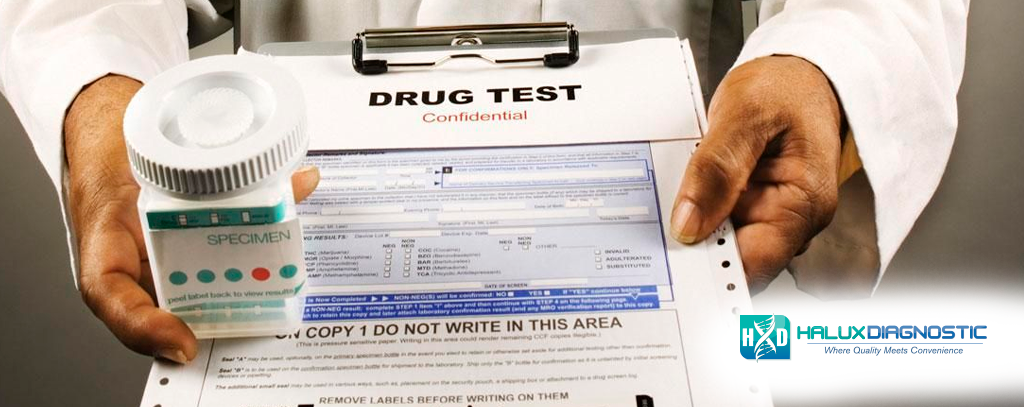
The employers who handle this cleanly have already answered these questions before an accident happens: who makes the fatality/citation/injury/tow determination on scene, who authorizes testing, and where the testing resources are kept so there’s no scramble in hour one. For companies managing their own testing programs rather than routing everything through a single clinic, having wholesale drug test kits on hand as part of an accident response kit removes one more variable from an already time-pressured situation.
A written post-accident testing procedure, reviewed with dispatch and safety staff rather than left in a policy binder nobody reads, is what actually keeps employers inside the federal windows when it counts.