
Post-Accident Drug Testing: What the Timing Rules Actually Require
November 16, 2026
Pre-employment drug testing happens once, before a candidate starts work, and screens out disqualifying drug use before someone is hired. Random drug testing happens on an ongoing, unannounced basis to deter and detect use among current employees, with selections made by an unbiased method so every eligible worker has an equal chance of being picked at any time. Most mature drug-free workplace programs use both, but they solve different problems.
What Pre-Employment Testing Actually Screens For
Pre-employment testing is a one-time checkpoint. A candidate receives a conditional job offer, completes a specimen collection, and the employer confirms a negative result before the start date becomes final. Because it happens before anyone is on payroll, it’s the cheapest and lowest-risk point in the employment relationship to catch an issue.
It’s also the most common point where employers first build out a testing program, since it applies uniformly to every new hire and doesn’t require an ongoing selection process. In supplying testing programs to staffing agencies and employers building their first policy, we’ve seen pre-employment testing consistently be the first piece they put in place, with random testing added once the broader program matures.
What Makes Random Testing Different
Random testing isn’t triggered by a hiring event or a specific incident. Employees are selected periodically from a pool using a method that gives no advance warning and no pattern an employee could predict or avoid. That unpredictability is the entire point: it’s what creates ongoing deterrence rather than a single screening moment a candidate could plan around.
For DOT-regulated positions, this isn’t optional or employer-discretion. Under 49 CFR Part 382, FMCSA’s random testing rules require covered employers to randomly test at a minimum annual rate of 25% for controlled substances and 10% for alcohol, with selections spread reasonably throughout the calendar year rather than clustered at convenient times. The regulation also requires a two-stage selection process so that every employee in the testing pool has an equal chance of being chosen, which matters most for employers with multiple locations pulling from a shared pool.
Non-DOT employers aren’t bound by Part 382’s specific rates, but many voluntarily adopt a similar structure, choosing their own random testing percentage and selection method as part of a broader drug-free workplace policy.
When Each One Applies
Pre-employment testing applies at hire, full stop, for any position the employer has designated as safety-sensitive or otherwise subject to testing. It’s a gate, not an ongoing process.
Random testing applies continuously to employees already in a designated testing pool, whether that pool is defined by a DOT safety-sensitive function or by an employer’s own written policy for non-regulated roles. An employee can be selected the week they start, the week before they leave, or any week in between. There’s no “recently tested” exemption built into most policies, though individual employer policies sometimes address how soon after a pre-employment test someone re-enters the random pool.
A Common Misconception
A frequent misunderstanding is that passing a pre-employment test satisfies a company’s testing obligations going forward, or that random testing is somehow redundant once someone has already tested clean to get hired. The two serve different functions. Pre-employment testing answers one question: is this candidate drug-free right now, at the point of hire? Random testing answers an ongoing question: is this employee’s status unchanged over time, when there’s no predictable moment to plan around? A program built on pre-employment testing alone has no mechanism for catching use that develops after someone is already on the job.
The Documentation Piece
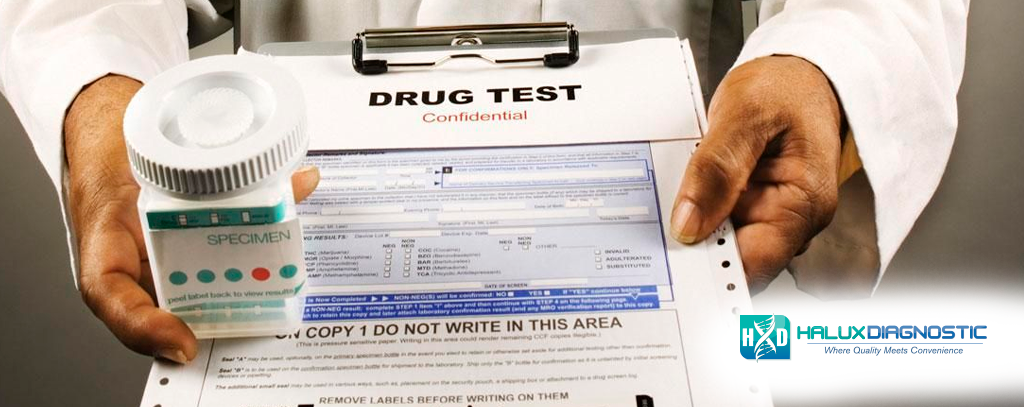
Whichever type of test is used, the paperwork matters as much as the result. Chain of custody, correct form usage, and accurate collection-site documentation all affect whether a result will hold up if it’s ever challenged, particularly for DOT-regulated employers where audits and enforcement actions turn on whether the program was actually run according to the regulation, not just whether tests happened.
For employers building or expanding a testing program, sourcing consistent, compliant materials matters here too. Many companies work with a wholesale drug testing supplies partner precisely so that both the pre-employment and random components of a program use the same reliable kits and documentation standards, rather than mixing sources between the two.
The Bottom Line
Pre-employment testing is a single screening event at hire. Random testing is an ongoing, unannounced process that continues for as long as an employee is in the testing pool. DOT-regulated employers must run both under specific federal minimums; non-regulated employers can choose to run either or both as part of a written policy. Most comprehensive programs use pre-employment testing as the entry gate and random testing as the ongoing deterrent, since neither one covers what the other is designed to catch.